




What is Conversational AI UX?
Conversational AI UX is a practice in user experience design in which users can establish their interaction with technology using chat, voice, gestures, or any other similar way that can foster human communication. The emergence of innovation in technology has led to chatbots, voice assistants, AI Avatars, etc. to reach the general public in their phones, living rooms, laptops, cars, etc.
Conversational UX design can be useful in smoothening interactions between humans and technology. The commonly known Conversational AI personalities or platforms that directly interact with humans are Alexa, Google Assistant, Siri, etc. There are various other voice-enabled apps, chatbots, digital avatars, etc. which are ruling the conversational AI world.
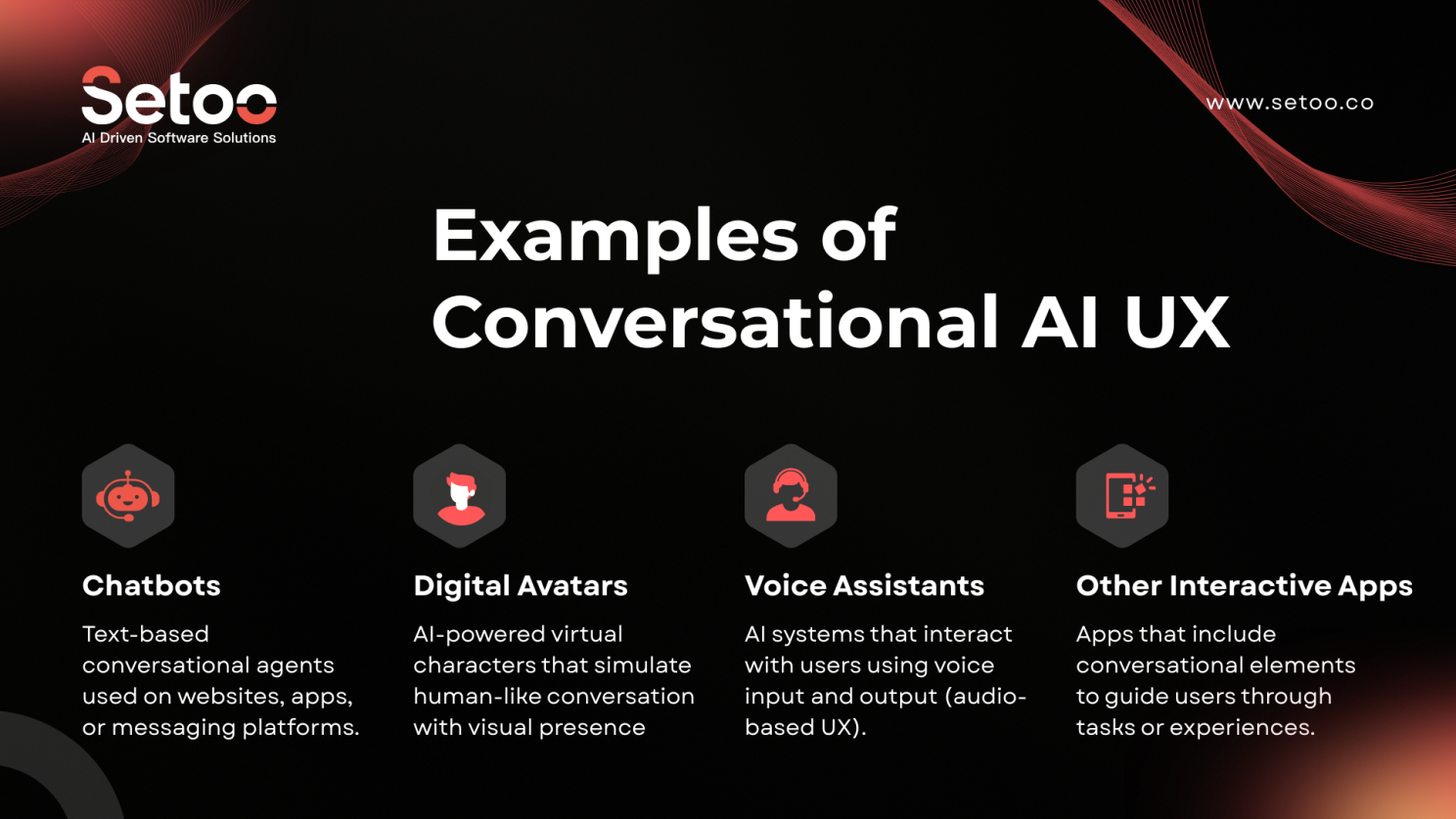
What are Examples of Conversational AI UX?
- Chatbots
- Digital Avatars
- Voice Assistants
- Other Interactive Apps
What are the Best Practices for Conversational AI UX?
-
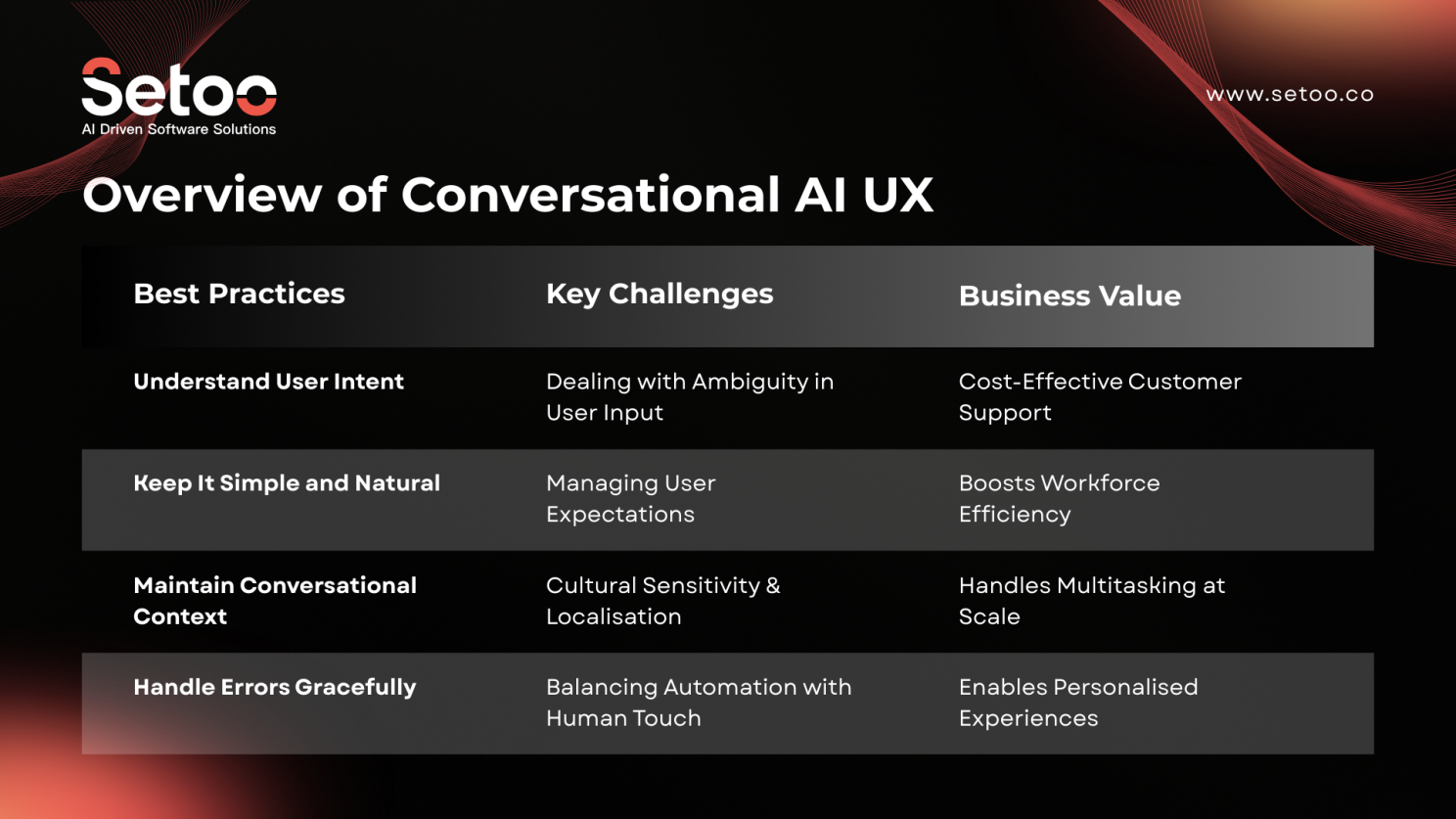
Understand User Intent: An effective Conversational UX is essential for AI platforms, applications, or assistants as it directly interacts with users or customers like humans. Understanding the existing user requirements and finding an opportunity to enhance the user experience with UX by involving AI technology is the art of Conversational AI UX.
-
Keeping it Simple and Natural: The best principle of UX is to keep the functionality and language as simple as possible. It is important to design interfaces that are easy to understand, guiding users toward their goals without confusion. The user or customers would like to talk to AI bots or platforms if they have a similar conversational style like humans. So it is essential to optimise the technology to an extent that user experience as well as interaction is enhanced.
-
Conversational Context: Ensuring the system remembers prior interactions to create a smooth, personalized experience.
-
Error Handling: It is essential to implement clear ways for users to correct misunderstandings or navigate dead-ends in conversations.
-
Feedback Loops: Ensuring the user is aware of actions being taken in the background or when the system is processing a request.
-
Continue Testing: The more and more Conversational AI platforms, assistants, or apps are used, it allows collecting more data. This helps the concerned team to analyse data continuously to improve for the future.
Why is Conversational AI UX Important for Business?
Conversational AI UX’s popularity has increased as it easily impacts companies' operations. The importance of Conversational UX is discussed below:
-
24/7 Availability of Issue Resolution: With the conversational AI assistants or platforms users or customers can address their concerns at any time.
-
Cost Effective: The cost spent on various traditional staff can be reduced by adopting chatbots, digital avatars, etc.
-
Maximizing Workforce Efficiency: It liberates human resources from monotonous and time-consuming tasks. The saved time and skills of the workforce can be used for other productive endeavors.
-
Multitasking Efficiency: The conversational AI UX fosters the ability to attend to multiple users at a time, which in turn saves time and enhances user or customer experience and satisfaction.
-
The Importance of Personalization: With structured user flows and user research conversational AI platforms can be designed in a way that helps in adapting to individual user preferences, habits, and past interactions to create a tailored experience.
-
Enhancing User or Customer Experience: The personalisation effect in the conversational AI UX ensures helps in improving user satisfaction and builds loyalty over time. Examples of personalisation can be addressing users with their names, giving recommendations, solving user-specific queries, etc.
Key Challenges In Conversational UX
-
Understanding Ambiguity: The most difficult task in designing conversational UX is to balance the user intent and the uncertainty of unclear input of users. At the end of the day, conversational AI is a system that needs to be trained to tackle such challenges.
-
Managing Expectations: While designing conversational AI UX it is challenging to manage user expectations as conversational systems are not real humans so they have limitations on functionality.
-
Cultural Sensitivity and Localisation: It is essential to make sure conversational systems are inclusive and culturally aware, especially in global applications so they can easily interact with various users or customers.
Conclusion
Conversational AI UX is transforming the way businesses and users interact with technology, making it more intuitive, efficient, and accessible.
By understanding user intent, maintaining simplicity, and continuously improving through testing, businesses can leverage Conversational AI UX to maximize efficiency, reduce costs, and enhance customer satisfaction. In a world where communication is key, adopting Conversational AI UX is not just an option—it's a necessity for staying ahead.